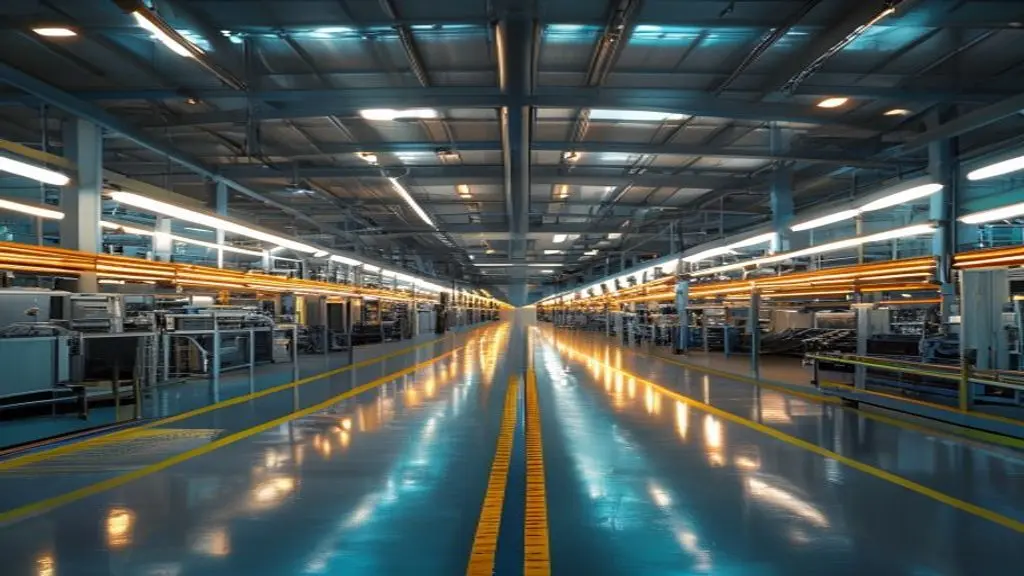
Reliance on paper on the factory floor remains one of the largest bottlenecks hindering competitiveness across mid-to-large manufacturing plants. Often, Quality Managers are bogged down with paper clipboards, fragmented spreadsheets, and unacceptable feedback loops between defect identification and corrective action.
In this landscape, deploying a digital quality management framework — an e-QMS (Electronic Quality Management System) — is no longer just an eco-friendly target to limit printing. It is the fundamental component for surviving strict ISO audits and mitigating scrap costs.
The Flaws of “Off-the-Shelf” Quality Solutions
The software market is flooded with ready-to-use SaaS solutions. However, when highly tailored industrial environments adopt them, structural mismatches rapidly emerge:
- Lack of Process Adaptability: Every plant has proprietary flows and specific clearance thresholds. Generic platforms force staff to alter established operations, leading to dramatic drop-offs in shop-floor adoption.
- Poor Integration Architecture: Quality data must synchronize instantaneously with your Manufacturing ERP. If an e-QMS flags Batch X as "non-compliant", and the production system only reflects this at shift’s end, logistical damage is already inflicted.
- Hostile UI on the Shop Floor: Complex interfaces with tiny toggles fail completely on an industrial touchscreen exposed to gloves and grease.
Empowering Production: Custom-Built e-QMS
A system precisely engineered for the organic requirements of your core operation provides a high return on investment within the first few weeks of adoption. By focusing completely on usability constraints in tough industrial environments, we drastically lower the friction that slows data entry.
The core value in a custom e-QMS is not simply turning paper into PDFs, but turning raw quality data into instantly actionable business intelligence.
1. Seamless Traceability and Painless Audits
During thorough tier-1 external audits, the hidden cost of searching for manual signatures within archives is staggering. In contrast, operating under a unified data framework allows inspectors to drill down into approval history, batch relationships, and stock flow connected to the inventory management module via a single query.
2. Orchestrated AI Alerts for Defect Prevention
Twenty-first-century competitive intelligence commands more than end-of-month post-mortem dashboards. Through integrated modeling mapped via AI-Driven Integration, a sophisticated e-QMS scrutinizes microscopic variances (e.g., molding pressure drops) against historical trends mapped in your predictive maintenance systems.
As soon as a pipeline suggests materials are slipping toward failure (AQL limits), machinery parameters can be autonomously adjusted or the equipment sidelined—propelling crucial data to supervisors' operational displays or their encrypted mobile portals.
// Illustration of real-time sensor processing triggering holds dynamically
const analyzeQualityDeviation = async (sensorData, aqlLevel) => {
  if (sensorData.variance > aqlLevel.threshold) {
    await eQMS.triggerHold(sensorData.batchId);
    await AI.notifySupervisors({
      department: 'Injection Molding Section 3',
      reason: 'Statistical thickness deviation exceeded 0.05mm in the last 15 cycles.',
      urgency: 'HIGH'
    });
  }
};
3. Direct Hardware Integration (IoT and HMI)
The Achilles heel of traditional quality systems is the reliance on a human operator to perform data entry manually after a machine performs the core work. In a custom-built e-QMS, quality management software integrates directly into the production line’s PLCs using industrial communication standards.
Crucial readings such as temperature, torque, pressure, or calibration states are injected straight into inspection logs. This completely bypasses the operator and effectively eliminates human transcription errors.
4. Calibration Tracking and Document Maintenance
Countless audits have generated major non-conformities simply because a micrometer’s calibration certificate was expired or lost inside a cabinet. An embedded asset module inside your bespoke e-QMS can tie tool certification directly to the production line usage. If an operator attempts an inspection using equipment with expired legal certification, the e-QMS hard-locks the evaluation, guaranteeing total compliance.
Quantifying Return on Investment (COPQ)
The Cost of Poor Quality (COPQ) can frequently represent up to 30% of gross sales in high-volume manufacturing environments. By deploying a custom e-QMS constructed entirely around your distinct workflow, organizations attack these structural costs aggressively by:
- Drastic Scrap Reduction: Analytical detections foresee defect generation, halting the production line before hundreds of corrupted parts consume expensive raw material.
- Minimized Downtime: Managers spend fewer hours in an office trying to decipher illegible, grease-stained handwritten logs. Immediate insights translate to instant corrective actions.
- Accelerated Product Release: Waiting days for manual batch record validation and paper sign-offs is eliminated. Digital release workflows move approved stock into the logistics center faster and ready for shipment.
Initiating the Digital Pipeline
A successful digital transition resists the "big bang" implementation bias. Value and reliability at Neumotik are achieved by employing agile rollout strategies—securing the absolute critical operational path first, then scaling modules continuously.
Stop compromising operational continuity for rigid perpetual software licenses. Talk to us to evaluate how we construct robust, results-focused systems for ambitious manufacturing operations.