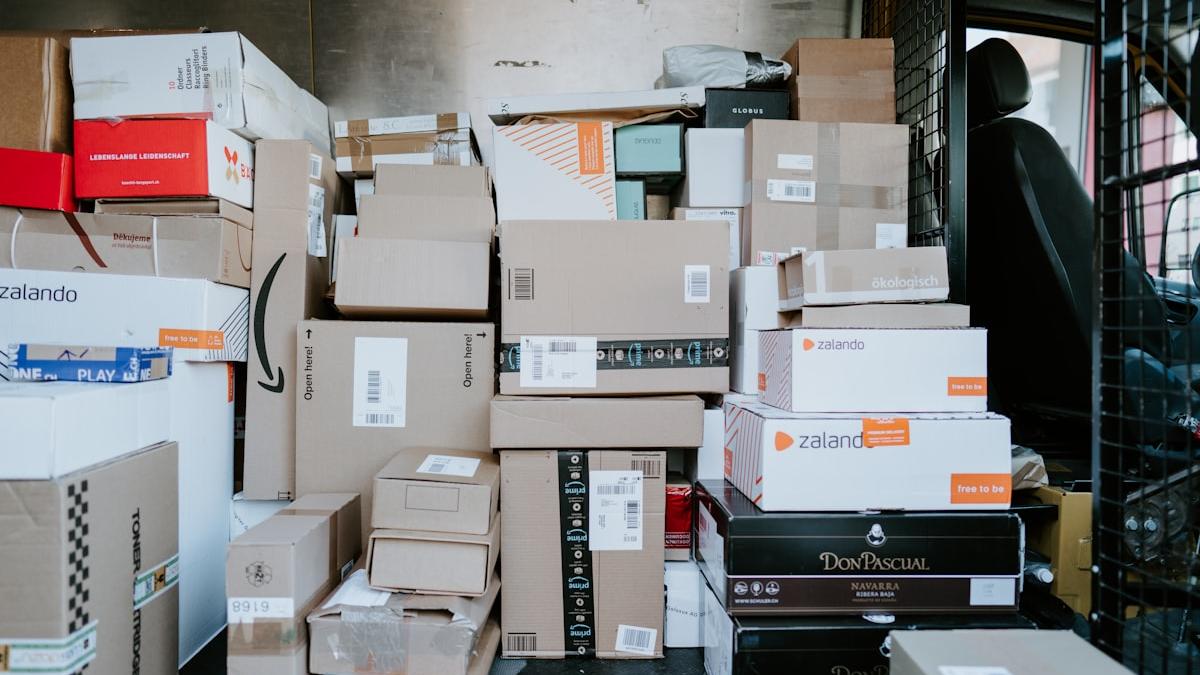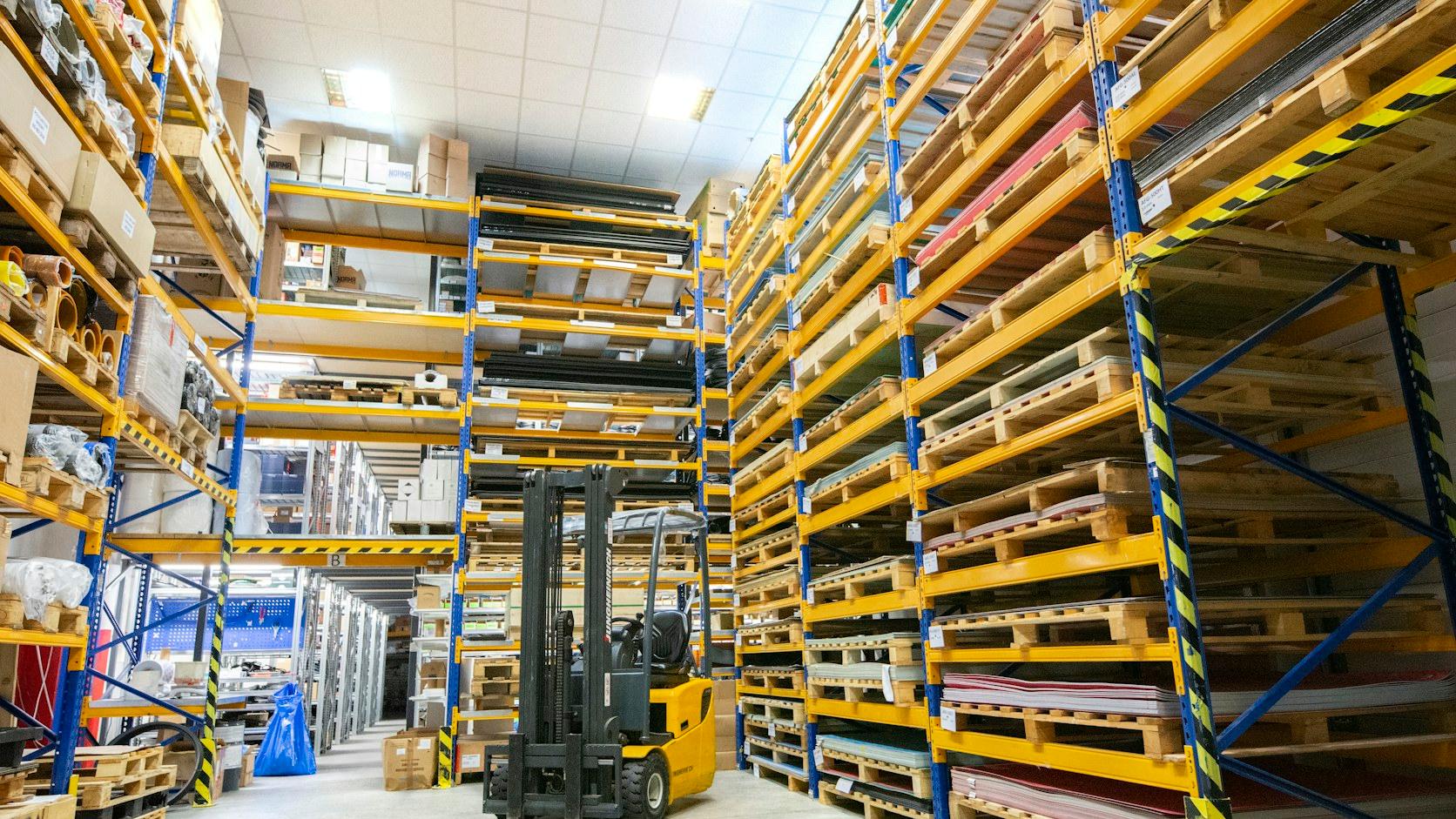
Thursday, half past eight in the morning, at a distributor with three warehouses and around six thousand product lines. The person who handles orders has thirty or so unread WhatsApp messages, half of them photos of lists scribbled on a restaurant counter. There are four emails with spreadsheets attached, each in its own format, and the phone has already rung twice with someone asking for "same as last week, but two more cases of olive oil".
Last week, an invoice went out at the standard list price instead of the agreed one, because the summer promotion overlapped with the product-family discount and nobody knew which of the two should win. It was fixed with a credit note. At the end of the month, management sees healthy revenue figures per customer, without being able to say how much was actually left after the year-end rebate, the free goods and three weekly deliveries forty kilometres away for orders worth two hundred euros.
Anyone running a distribution business recognises every part of that scene. They also recognise that none of it is an accounting problem.
Short answer
A wholesaler needs a custom ERP when the price matrix lives in a separate spreadsheet, invoices get corrected with credit notes and nobody can state the real margin per customer without combining data from two systems. You do not usually replace everything: you build the commercial layer (pricing, orders, credit and margin), connected to the tax-certified invoicing software the company already uses. A commercial core costs between €30,000 and €50,000, an ERP with warehouse management between €50,000 and €80,000, and for a mid-sized wholesaler the project takes 18 to 26 weeks, including the parallel run with the current system.
The problem sits in the commercial layer
In a wholesale business, the invoice is usually fine from a tax point of view. What goes wrong is what happens before and after it: how you arrive at the right price for that customer, on that day, at that quantity; how the order comes in, wherever it comes from; and the sum of what is left once everything that happens outside the invoice is accounted for. This is where a product designed to serve every sector stops keeping up with a business that lives on margins of a few percentage points.
So for a distributor, a custom ERP almost always means building that commercial and operational layer, connected to the certified invoicing software the company already has. It is not about replacing everything. It is about putting into a system the rules that today live in the sales director's head and in three spreadsheets.
Signs your distribution business has outgrown its system
Two or three of these are normal. Five or more mean the system is no longer keeping up with the business:
- each customer's price list, or at least the exceptions, lives in a spreadsheet outside the ERP;
- there are credit notes every month for wrong prices, not for returns;
- nobody can name your least profitable customer without a week in Excel;
- the annual volume rebate is calculated by hand in January and always surprises someone;
- orders arriving by WhatsApp and email are retyped into the system one by one;
- sales reps phone the office to check stock, price or a customer's credit;
- a customer on credit hold is only spotted once the goods are already on the lorry;
- a batch recall means digging through paper delivery notes to find out who received it.
Where an off-the-shelf ERP stumbles in wholesale
The right price is a cascade, not a number
The price on an order line is the result of a sequence of rules: the base price, the price list for the customer or the buying group they belong to, the product-family discount, the quantity break, the dated promotion, the net price negotiated for a handful of items, the free-goods deal of the "twelve plus one" kind and, at the end of the year, the rebate on volume. Each rule on its own is simple. The difficulty is in the combination: does the promotion stack on top of the family discount or replace it? Does the negotiated net price ignore the promotion, or does the customer get whichever is better?
Most often, this rule was never written down. A custom system forces you to write the order of precedence once, with a named person who decides, and records on every line which rule won. When a customer disputes a price, the answer is on the screen instead of requiring an investigation.
The real margin only shows up after the invoice
The invoice shows the gross margin on the line. The margin management cares about deducts the rebate owed, free goods, the cost to serve (number of deliveries, distance, average order value), returns and the payment terms the customer actually keeps to.
Picture two customers with the same annual revenue. One takes a pallet a week and pays at 30 days. The other gets three small deliveries a week, returns goods often and pays at 90. On the sales report they look identical; in the real numbers, one is subsidising the other. A custom ERP runs this calculation by customer, route and sales rep every month, with the rebate accrued month by month so that January does not look like a disaster.
Orders arriving from every direction, and reps without a signal
Phone, WhatsApp, email with a PDF, a spreadsheet exported from the customer's own system, the rep out in the field. Forcing everyone onto a single channel works with the larger, more organised customers. It does not work with the owner of a café or a site foreman, and insisting on it costs sales. The realistic answer is a single order inbox, where everything lands, is matched to the customer and goes through the same pricing, credit and approval flow.
On the sales side, the app has to show the catalogue, that customer's price, stock, the credit limit and the order history, and accept the order in a cellar or on a building site with no coverage. That means deciding in advance what happens at sync time if stock ran out or the customer was put on hold that morning.
Routes, batches, returns and credit
We are not talking about fleet management here, which is a separate system (and one we cover in the comparison of custom ERP and SaaS in logistics), but about the commercial rules that depend on the route: delivery days by area, the cut-off time for next-day dispatch, the restaurants that only take deliveries before eleven, the building sites that open at seven, the minimum order value below which a delivery does not pay for itself.
In food and drink, dispatching by expiry date and recording which batch went to each customer are not optional: in a recall you need to know within minutes where every batch is. There are returnable crates and pallets, and in electrical supplies or spare parts there are returns for defects, for errors and under warranty, each with its own stock and credit treatment.
A credit limit usually exists, but it gets checked late, when the invoice is issued. The useful rule is to check it when the order is placed, with three possible outcomes (go ahead, go ahead with a warning, hold) and a named person who can release it, with a record of who authorised it.
Where artificial intelligence comes in, in concrete terms
There are three uses of AI that work for a distributor today and pay their way.
Reading orders from WhatsApp, email and photos. The AI turns "6 cs of the small ones and 2 crates of the litre" into a draft order with the right catalogue references for that customer, with a confidence level on every line. A person only checks what was left uncertain, and each correction is saved as a mapping for that customer, so the checking shrinks over time.
Suggesting the usual order. Based on order history, the system proposes to the sales rep, or to the customer through an extranet, their usual basket adjusted for frequency and season. It stops the item the customer buys every month from being forgotten.
Flagging when a customer starts to drift away. A customer who stops buying altogether gets noticed. The one that costs money is the customer who still buys coffee but stopped buying cleaning products six weeks ago, because they now get them elsewhere. Detecting drops by product family against that customer's own pattern, and putting the list in front of the sales rep on Monday morning, is one of the uses with the easiest return to measure.
None of these works on messy data. If the same product was created three times, the AI will pick the wrong one without hesitating. That is why AI usually comes after the pricing engine and the clean-up of the product master file. If the current ERP is good enough and the only problem is order entry, AI can be connected to the existing system without changing ERP, using the checks we describe in the article on AI for reading PDF invoices and orders.
Certified invoicing: integrate, do not replace
In Portugal, a business the size of a wholesaler generally has to issue its invoices and other tax-relevant documents through software certified by the Tax and Customs Authority (AT). Since 2023 all of those documents carry a unique document code (ATCUD), and invoices are reported to the AT. Transport documents have to be reported before the goods start moving (smaller businesses below a turnover threshold are exempt), and the AT returns an identification code that is linked to the delivery note.
Building and certifying your own invoicing program is rarely worth it for a distributor. The design we recommend is different: the custom ERP works out the price, checks credit, prepares the load and sends the document, through an integration, to the certified software the company already uses, which issues it and handles the reporting. The ERP gets the number and codes back and keeps the link between order, delivery note and invoice. It is the same logic we describe in the comparison between custom software and Primavera, PHC, ARTSOFT or SAP: keep the product where it is strong and build only the missing layer. The tax side of the design should always be validated with the company's accountant.
Three wrong answers
One more customisation to the current ERP. It works for a while, until every product update breaks something and only one person at the implementation partner knows how it was put together.
Switching ERP over a weekend. Replacing a wholesaler's core system in a single cut-over is the most expensive mistake in this kind of project. Operations do not stop for the migration, and a wrong price shows up on the very first invoice.
Launching an extranet and hoping WhatsApp goes away. An extranet with online ordering is useful for customers who want to serve themselves and fits well as a second phase. Without a reliable pricing engine behind it, all it does is show the customer the same mistakes faster.
From pricing rules to the parallel run
1. Free diagnosis
Around thirty minutes to understand the operation, the systems and where the manual work is. There is no obligation to go ahead, and if your current system is good enough, we will tell you.
2. Discovery and proposal
About three weeks. We write down the pricing cascade with the sales director, rule by rule. We collect a month of real orders from every channel, messages and photos included, and map the integrations with invoicing, accounting, warehouse handheld terminals and carriers. At the end, the scope, timeline and investment are fixed.
3. Build, validated against real invoices
Two-week cycles, each with a demo. The pricing engine recalculates months of invoices already issued, and every difference is reviewed with the sales team: either it is a bug in the new system, a rule nobody had written down, or an old mistake that was being paid for without anyone noticing.
4. Parallel run and go-live
Both systems run side by side for an agreed period, products, customers, balances and history are migrated, and the team is trained on their own day-to-day work. Three months of support are included, and the code and infrastructure belong to the company.
What it costs and how long it takes
| Scope | What it includes | Investment |
|---|---|---|
| Commercial core | Products, customers, price matrix, orders and link to invoicing | €30,000 to €50,000 |
| ERP with warehouse | Adds picking, checking, handheld terminals and returns | €50,000 to €80,000 |
| Multi-warehouse ERP | Several warehouses, transfers, batches and full traceability | from €80,000 |
| Extranet with ordering (add-on) | Customer ordering written into the ERP, credit limits and approvals | €25,000 to €45,000 |
For a mid-sized wholesaler, the project takes between 18 and 26 weeks, covering discovery, build, migration and the parallel run (we explain where these timelines come from in how long a custom software project takes). The figure goes up with the real complexity of the pricing cascade and with the number of systems to integrate, especially if they have no documented way of exchanging data. It comes down with a tidy product master file and with someone in the company who has the authority to decide commercial rules without waiting for the next meeting.
It also comes down when the company already has a working prototype, built in ChatGPT, Claude or Gemini, of the order screen or the price matrix, which is increasingly common. It shortens discovery, although what no prototype brings is still missing: user accounts, real data, a connection to the ERP and invoicing, backups and testing. That is the work of taking AI-built applications into production. To read any proposal, ours or someone else's, we put together a line-by-line example of what a custom software quote should include.
When an off-the-shelf ERP is enough
If the catalogue is small, the price list is much the same for everyone and orders come in through one or two channels, an off-the-shelf ERP with a good sales module will do the job, for a fraction of this investment. It is also not worth it when the problem is purely one of configuration: there are companies using half of the distribution features they already pay for, and the right first step is to talk to the product's partner.
A custom system makes sense when commercial complexity is itself the competitive advantage: prices negotiated customer by customer, terms a competitor cannot replicate, a service that depends on delivering at exactly the right time.
Questions to answer before going ahead
- Who decides the order of the pricing rules when two of them conflict?
- How many credit notes for wrong prices were issued in the last twelve months, and for how much?
- What share of orders comes in by WhatsApp, email and phone?
- Should the margin per customer include delivery cost and the actual payment terms?
- Which certified invoicing software will issue the documents, and does it offer an integration?
- Is the product master file clean, or are there duplicate references and products filed under the wrong family?
Our ERP for wholesale distribution is exactly this work: putting into a system the commercial rules that today live in spreadsheets and in the memory of whoever has been with the company longest, connected to certified invoicing and with reliable data for AI to work on. If the opening scene sounded familiar, you can request a free diagnosis. In a first conversation, with no commitment, we work out where margin is leaking and whether building makes sense, and only then talk about a proposal.